In Praise of the Illusion of Not Being Alone
Long ago, there was a strategy game called Stronghold Crusader, known in Iran as the Crusades. Your role in this game was to manage and develop your castle and people for battles with neighboring castles. The key point was the satisfaction level of your people. If satisfaction fell below 50%, people would start leaving the castle, and you’d effectively lose your workforce and army. Conversely, if satisfaction stayed above 50%, new people would continually join for work and war, keeping your castle’s economy running smoothly.
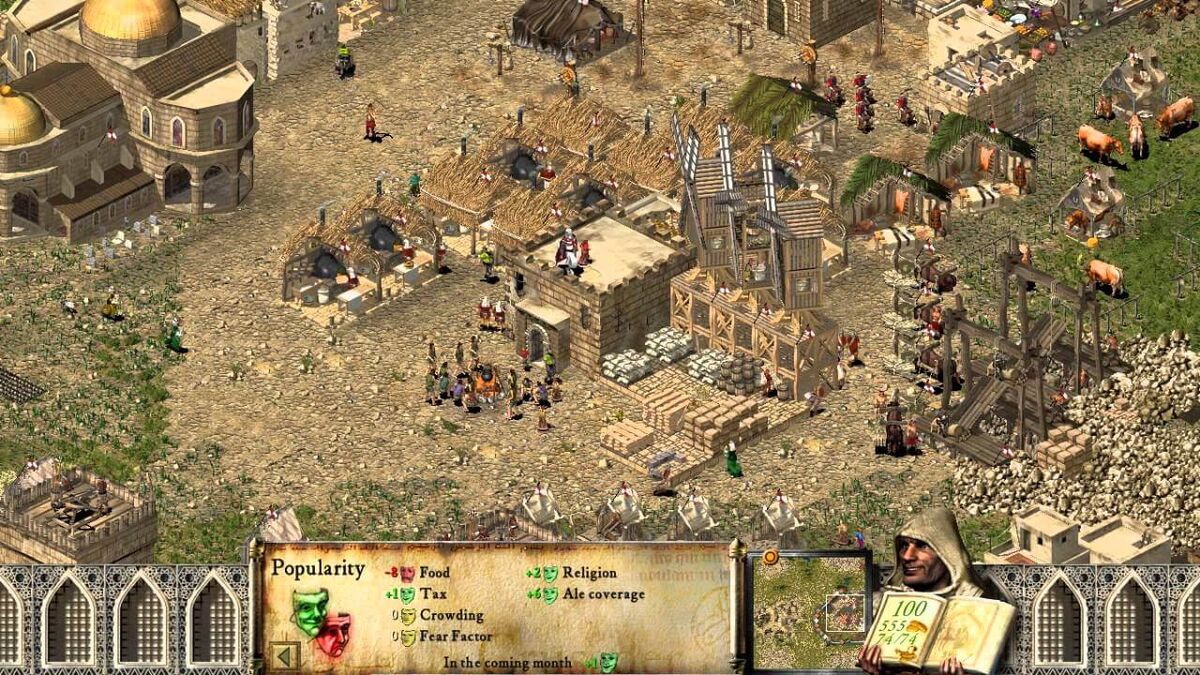
As you can see in the image, the satisfaction of your people depended on six factors: food, taxes, entertainment, punishment, religion, and indifference (related to the number of bars).
It’s clear that this game is an isolated reflection of the real world. To keep the economy running, public satisfaction must remain at a reasonable level. If people lack proper food, entertainment, and other positive aspects, social collapse naturally follows.
Until today, I blamed social networks for wasting time and opportunities, believing their benefits were purely illusory, offering no real advantage to anyone except their creators.
However, yesterday, while imagining myself trapped in life under a capitalist system and simultaneously overwhelmed by intense loneliness, it occurred to me that social networks, aside from their financial benefits, also serve as a tool to alleviate extreme loneliness, even if only as the illusion of not being alone, allowing the economic wheel to keep turning. Otherwise, massive lines of hundreds of thousands of people would soon form in front of therapists, assuming they could help this level of modern human isolation.
The reality is that every effect has a cause, and this presence on social networks, the wasted time, and the illusion all stem from something.
When I suggest to someone that they leave social networks, I also recommend alternative ways to spend time, such as nature walks, socializing with friends and acquaintances, and similar activities. But in today’s urban life, where you work 12 hours a day six days a week (and many others do too), how feasible are these alternatives?
Comments